Tuesday, March 27, 2007

Movies watched, week of March 18-24, 2007

Knife in the Water, Roman Polanski, 1962

For me, the most memorable aspect of this film is how visually stunning it is (though the visuals certainly don’t overshadow the plot, a complex, understated exploration of jealousy and exhibitionism). The crisp, black and white images are exceptionally striking, every shot framed in an interesting way, so that it seems as if any given still could serve as a museum-worthy photograph.


Scent of a Woman, Martin Brest, 1992

A typical prep school coming of age movie, wherein a young, naïve student and an old man are paired together and end up teaching one another about life. Pacino is an amazing actor (see The Godfather, Dog Day Afternoon, Serpico) but even he can’t save this cliché-ridden, saccharine, Hollywood version of a “profound” movie. It conveys a message I can get behind, but the problem is that the message is delivered in the form of a not-so-subtle speech, after which an auditorium full of people stands up and applauds. (Please.) I guess it seems kind of mean to make fun of a movie about a blind man, but come on—it’s just a movie, and a mediocre one at that.


Monty Python's And Now For Something Completely Different, Ian MacNaughton, 1971

While this is billed as their first feature, it’s not so much a cohesive film as a collection of sketches that are rather seamlessly segued into one another (except for when John Cleese announces, “And now for something completely different!”). While not as strong as later films like The Holy Grail and Life of Brian, there’s nothing all that problematic about this one, because whether or not there’s a single, unifying plot, it’s still funnier than most comedic movies could ever hope to be. (Hell’s Grannies, anyone?)


Manderlay, Lars von Trier, 2005

A lot of people seem to take offense to the fact that a European director is criticizing their country when he’s never even been here—that, however, doesn’t stop American filmmakers from making films about countries they’ve never visited. Moreover, I don’t see why one has to spend a holiday here in order to comprehend the impact we’ve effected on the world, nor to understand and express the facts of our history as recorded.

That said, Manderlay, while perhaps more accessible, is not quite as strong as 2003's Dogville. The minimalist set, consisting of a sound stage marked off with chalk and the occasional one or two-walled façade, which seemed so fresh and innovative before, doesn’t quite produce the same effect when used a second time. The film would likely have been more compelling if it hadn’t continued with the same characters from Dogville, acting not necessarily as a direct sequel, but the second film in a thematically linked trilogy. Nevertheless, Manderlay’s premise of introducing democracy to a community is a timely, topical one (it’s pretty clear in its paralleling of the situation in Iraq), and remains as thought-provoking as its predecessor.

Tuesday, March 20, 2007

Movies watched, week of March 11-17, 2007

Life is Beautiful, Roberto Benigni, 1997

As I watched the first half of this film, which chronicles Guido's (Roberto Benigni) romantic pursuit of his future wife, Dora, I thought it seemed a little strange that a story about the Holocaust would be so slapsticky, a style of humor that, while it's Benigni's specialty, seems like it should not be associated with the systematic annihilation of millions of people. But I watched on. When Guido and his son, Joshua, are whisked off to the concentration camps, the change in the story's pattern seems rather abrupt, although I suppose that's appropriate—it must have been jarring for the people who really experienced it. Guido starts pretending that their capture is really part of a game, in an attempt to protect Joshua from the harsh reality of the situation. But it seems highly implausible that the charade could be kept up for the duration of their capture, not to mention that the conditions of the concentration camps seem rather tame—no dead bodies to be seen, and their sleeping quarters look a hell of a lot cleaner and more comfortable than I would have imagined. I can see what Benigni intended with this—a life-affirming story that portrays the power of love between a family, and the sacrifices a father made for his son—but the plot is so unbelievable that it's rendered ineffective. I’m aware that Benigni calls it a “fable,” but I don’t think that sufficiently justifies it.


Pie in the Sky: The Brigid Berlin Story, Shelly Dunn Fremont & Vincent Fremont, 2000

This documentary about Brigid Berlin, a former debutante turned Warhol superstar, chronicles her transition, both physically and psychologically, from rich privileged socialite to subversive artist and speed freak (her nickname of “Brigid Polk” refers to her penchant for giving herself a “poke”). Of all the people who hung around the Factory, Brigid seems to me the most exceptional artist (perhaps overshadowed, however, by others around her); her work includes Polaroid double exposure photo montages (she’s considered by many to be the inspiration for Warhol’s use of Polaroids and tape recordings), her Cock Book (a blank book filled with drawings by various colleagues and artists of, you guessed it, although Leonard Cohen’s page reads “Let me be the shy one in your book,” to which Brigid understandably rolls her eyes) and “tit prints” (again, no explanation necessary—you can see her in action creating these).

Brigid’s life is marked by compulsive behavior, which she often explores in her art (or perhaps it’s simply an aspect that comes through unintentionally), most notably in recordings of conversations with her mother, pillows stuffed with shredded magazine clippings of penises, and “trip books” of tiny repetitive circles and dots created while high on amphetamine. Her apartment is kept in almost museum-like order, and, still battling with her weight, her eating habits consist of weighing everything on a scale (for example, .5 ounces of yogurt, .5 ounces of cottage cheese) before consuming it. At the start of the film, Brigid is down to an almost unhealthily skinny 123 pounds, but midway through she caves in to her weakness for key lime pies and rapidly gains 40 pounds after consuming, by her estimate, at least 50 pies in a month.

While she appears fairly put together and functional, Brigid is a troubled woman, dominated by her compulsions, and haunted by her past. She at one point recites, word for word, a long tirade directed at her by her mother (a traditional society woman who vehemently disapproved of Brigid’s associations with Warhol), her voice audibly distressed, even though the conversation probably took place thirty years ago; when the filmmaker takes her to the Chelsea Hotel, Brigid’s one-time home, she grows increasingly uneasy, finally saying, “I want to get out of here.” The look on her face is undeniably haunted, but she seems unsure as to why the place makes her so uncomfortable.


Shadows, John Cassavetes, 1959

There seems to be some confusion as to the degree of improvisation that John Cassavetes’ debut film can actually claim. At the end, there is a title card that reads, “The film you have just seen was an improvisation”—which, while it does achieve a kind of freeform, flowing impression, seems an extremely impressive feat on behalf of the actors (so much so that I momentarily forgave their occasionally poorly executed lines), as the dialogue and actions feel rather scripted. As it turns out, Shadows was originally filmed as an improvisation but Cassavetes was so embarrassed by it that he wrote a script and trashed all but about 30 minutes of the first version. This seems a more accurate representation, as it still retains an improvised, low-budget feel, but the written script pulls it together (I can’t imagine what a truly ad-libbed film would look like—an interesting experiment, but as far as quality is concerned, an inevitable failure).

Somewhat reminiscent of the French New Wave, which was happening simultaneously so I can’t really say whether either influenced the other, the film delves into interracial relationships and prejudices amidst the Beat-era jazz and literary scenes in New York.


Touch of Evil, Orson Welles, 1958

I find it incredible that Orson Welles, who made what is widely recognized as the greatest film ever made, was never again able to achieve the success of Citizen Kane—in F For Fake, he says, “I started at the top and have been working my way down ever since.” While Welles may not be blameless, the fact that Hollywood studios butchered his subsequent films in the editing room could not have helped matters. When Welles heard that Touch of Evil had been recut (including the addition of several scenes that he hadn’t even filmed), he delivered a 58-page memo imploring the studio to restore it to its original edit, but until 1998 his requests went ignored. (The current circulating version attempts to incorporate as many of Welles’s instructions as possible.)

The opening scene in Touch of Evil is a magnificent three minute-long continuous shot, starting with an unidentified person installing a bomb in the trunk of a car, then following the car from above, craning up and down in a complex set of movements, over rooftops and neon signs, as two people unwittingly drive off to their death when the bomb explodes. In the previous version, this sequence had titles printed over it, blocking much of the action and diluting the power of the shot, and included Henry Mancini music that obscured the natural street noises that Welles had intended for the score—it’s unbelievable that people whose job it is to make movies could be so clueless as to the art of filmmaking. It’s not even as if their edits made the film more commercial; for years it was considered a low-grade crime movie.

Tuesday, March 13, 2007

Movies watched, week of March 4-10, 2007

Do the Right Thing, Spike Lee, 1989

An extremely balanced, merciless portrayal of the degrees of hatred and racial prejudice that people exhibit towards one another in one Brooklyn neighborhood in the late 1980s (though it could be applied to anywhere). Excepting the film’s few voices of reason—the radio DJ Mr. Señor Love Daddy, Da Mayor of Bed-Stuy, and a few others—no one has respect for anyone else, exemplified in the scenes in which various people face the camera and spit out strings of racial epithets. Along with the oppressive summer heat, with temperatures seeming to climb throughout the day, their intolerance comes to a boiling point, wherein everyone loses control, from the cops, to the local pizzeria proprietors, to the neighborhood’s residents.

The Conversation, Francis Ford Coppola, 1974

Sound is the most significant aspect of this 1974 Coppola film. Harry Caul, a legend in the surveillance business, is assigned to record an exchange between two people. Their voices are peppered with robotic blips and bursts as Caul refines the sound quality through a filter, which immediately lends the film an odd, unnatural ambiance. With each tweak of the knobs, the voice’s meaning becomes clearer, though as we eventually realize, it doesn’t quite manage to capture every subtle nuance and inflection. Caul, however, isn’t all that interested in what his subjects are actually saying—this may, perhaps, be the first instance where he’s paid any attention to the content at all—but is fascinated by the technology that’s been used to record it. This seems to be the case with most surveillance professionals—when Caul attends a convention, he’s surrounded by crowds of other middle-aged men who are obsessed with the workings of hidden cameras and tiny microphones concealed in lapel pins.

Caul is a bit of a paradox, in that his profession, which he takes quite seriously, is to invade the private lives of strangers. And yet, he is secretive about his own private life to the point of paranoia, which only intensifies throughout the film: he hides his telephone in a drawer and tells people he has none, he doesn’t want his landlady to have a key to his apartment, he refuses to disclose any information about himself to the woman he’s romantically involved with (even after she’s clearly distraught about it, even after she asks him to leave if he won’t tell her something). When he discovers that his own apartment has been bugged, he tears apart every floorboard, smashes every object, desperate to find the device; the final image of Caul sitting in his wrecked apartment playing his saxophone is a strong one.

Bad Education, Pedro Almodóvar, 2004

Bad Education possesses distinctly Hitchcockian tinges; Vertigo, specifically, comes to mind, in its muddling of identity. In Vertigo, a man pretends that a woman is the woman he loves, not realizing that she actually is the woman he loves. Here, it’s even a little more complex than that—a man is well aware that another man is pretending to be the man he loves, but he allows himself to go along with the fantasy. Throughout the film, we are presented with three versions of, essentially, the same story: a childhood love affair between two boys, Ignacio and Enrique, is interrupted when a priest from their school, Father Manolo, discovers them together. Manolo desires Ignacio, so he expels Enrique out of jealousy. The young lovers meet again by chance fifteen years later, at which point Ignacio is plotting to blackmail Father Manolo for the money needed to complete a sex change operation. Our introduction to these events comes in a mostly fictional adaptation—a film within the film, if you will. Then, the “true” story on which the fictional film is based slowly emerges, ostensibly, until the real Father Manolo shows up and reveals the strangest, yet ultimately the truest, version. While this may sound rather complicated—and it is—it never seems quite as confusing while watching it onscreen.

2 or 3 Things I Know About Him, Malte Ludin, 2005

In a “typical German story,” Malte Ludin, the youngest son of German diplomat Hanns Ludin, explores the impact his father’s Nazi affiliation, as well as his eventual execution in 1947, has had on his family by interviewing his surviving sisters and brothers, as well as nieces, nephews, and his own son. Incredibly, many of his siblings insist that their father could not have known that by convincing the Slovak government to comply with deporting Jews to labor camps, he was actually sending them to concentration camps. Somehow, they manage to argue with Malte about degrees of responsibility, rationalizing their father’s actions. Admittedly, it must be extremely difficult to acknowledge that your father was responsible for so much suffering and death, and yet, the evidence is there. Watching them cling to their fond memories of their father while ignoring the facts isn’t so much touching as disturbing.

This reminded me a little of 51 Birch Street, in that the filmmaker interviews members of his family in order to come to a deeper understanding of his roots. While I find this genre of documentary filmmaking intriguing in theory, in practice it tends not to be as effective as one might think it should. Here, it seems unclear as to what Malte is trying to get his family to admit; no definite thesis emerges.

Sunday, March 04, 2007


Movies watched, week of February 25-March 3, 2007

The Devil and Daniel Johnston, Jeff Feuerzeig, 2005
Half Japanese: The Band That Would Be King, Jeff Feuerzeig, 1993

The subjects of these documentaries are interconnected (The Fair brothers appear in The Devil and Daniel Johnston, and, more subtly, Jad plays a Johnston cover in The Band That Would Be King), as friends, musical collaborators, and, simply, members of similar musical scenes. And yet, there is something inherently different about these two performers that strongly affects the tone of each film. I’ll be discussing this at much greater length in an upcoming Terminal Boredom column.


Sweet and Lowdown, Woody Allen, 1999

This film about a fictional 1930s jazz guitarist, Emmett Ray, culls elements of both documentaries and biopics, with the narrative interrupted continuously by music experts and journalists who offer their perspective on the subject. Ray is extremely egotistical, yet noticeably insecure. He’s obsessed with the guitarist Django Reinhardt (it is mentioned at various points throughout the film that Ray fainted both times he saw him perform, and can’t listen to his music without crying), often uttering the phrase, “I’m the greatest guitar player in the world,” then hanging his head and muttering, “Well, except for this gypsy in France.” A flagrant ladies man, Ray meets Hattie, a mute laundress, on the boardwalk in Asbury Park, and, though at first he’s annoyed that she can’t talk, in an odd way, he falls for her. One might even say she’s the great love of his life. While he treats her as more of a servant at times, and has multiple affairs, she seems to understand him far better than the pseudo-intellectual dilettantes who swarm after him, smitten until they’re dumbfounded by his hobbies (the man loves shooting rats and watching trains pass).

The historians often mention the typical “Emmett Ray story,” the type of fable of mythical proportions, of which there are multiple versions, none of which can be confirmed. In one particular story, Ray’s new wife, Blanche, and her lover, Al, arrive at a gas station, while Ray hides under the seat of the car, having followed them. The gas station just happens to have been held up at that moment, and the robbers run out and decide to use Al’s car as a getaway car, while Ray is still hiding under the seat. One of the historians then cuts in, saying, “That’s not what I heard,” and his version of the story is then played out from start to finish, with multiple versions ensuing. This is the type of playing with narrative, of pushing the limits of what a film can do, that I’ve come to expect of a Woody Allen film. Unfortunately, I’ve been pretty disappointed lately.


Three Women, Robert Altman, 1977

More on this later.


The Lives of Others, Florian Henckel von Donnersmarck, 2006

In 1984, Hauptmann Gerd Wiesler, a member of the East German secret police (more commonly known as the Stasi), is assigned to spy on the playwright Georg Dreyman and his girlfriend, their apartment freshly bugged. Wiesler sits alone in an austere room, empty save for some mechanical equipment, wearing headphones and jotting down a report of their daily activities. His is a lonely life, accentuated by a visit from a prostitute—he implores her to “stay awhile,” but she, of course, has business to attend to elsewhere.

In the beginning, Wiesler is portrayed as a hard-line, unsympathetic interrogator; when one of his students argues that his practice of questioning suspects for lengths of 40 hours or more is inhuman, he brushes off the idea with a blue checkmark next to the student’s name. And yet, he quickly changes his mind once he is assigned to observe Dreyman, his sympathies falling on the playwright and his plight. Even after he comes across some information worthy of reporting to his superiors, he chooses to protect Dreyman and his colleagues, writing that they are preparing a play to commemorate the 40th anniversary of the GDR, as opposed to their actual project, an article about the GDR’s suppression of information concerning the number of suicides occurring in their country, which they smuggle out to the West to be published.

Wiesler’s actions are not without emotional conflict—at one point he calls the border patrol to warn them that one of Dreyman’s colleagues will be sneaking into West Germany, hanging up at the last second. Nonetheless, I was at first not convinced: Wiesler’s dramatic transformation from ardent Socialist to political deviant seemed sudden and unlikely. Once the film ended and I had a chance to mull it over, however, I determined that his change in beliefs did happen somewhat gradually, from a few subtly planted scenes in which he observes his superiors acting hypocritically, culminating in his discovery that the investigation of Dreyman’s activities has been initiated solely because the Minister has the hots for his girlfriend and wants him out of the picture. Wiesler, as mentioned previously, leads a solitary life; he is a man of few words. His feelings are communicated through facial expressions, and, most likely, inflections in his speaking voice, something that subtitles cannot communicate. Thus, my failure to grasp the arc of Wiesler’s transformation may stem not from any weakness on the filmmaker’s behalf, but simply from the fact that I cannot understand German.


The Spirit of the Beehive, Víctor Erice, 1973

Comparisons of this film to the recent Pan’s Labyrinth are not without precedent; both take place during the Spanish Civil War, the main character a young girl who pays daily visits to a “spirit.” But that’s where the similarities end. In Spirit of the Beehive, the political elements are much farther from the foreground, perhaps only mentioned when the girl’s mother writes lamenting letters to her lover, who she has not heard from since he went off to fight in the war.

Two sisters, Ana and Isabel, see a Spanish-language dubbed version of James Whale’s Frankenstein at their local town hall. (This part reminded me somewhat of Cinema Paradiso, in the characters’ sheer excitement over a movie, any movie, coming to town; in Beehive, the children crowd around a truck that’s just pulled up, shouting, “The movie is coming!”) Ana is profoundly affected by the screening, particularly the part in which the monster and the little girl throw flowers into a pond. Isabel, the older and somewhat worldlier of the two, tells Ana that Frankenstein’s monster is really a spirit who lives in a nearby abandoned farmhouse; he only comes out at night, but if you are his friend, he will appear to you if you close your eyes and talk to him. At first visit, the farmhouse appears empty, though Ana discovers a large footprint in the dirt, which she gingerly steps into with her own, much smaller foot. Eventually, she discovers a wounded soldier hiding out there, though she understands him to be the spirit.

The film masterfully captures the feeling of childhood innocence. Impressionistic and heavy with symbolism, the beautiful cinematography conveys a striking image; when I think of this film I envision the barren, golden fields surrounding the girls’ home, empty except for Ana’s tiny figure running across them. As characterized by these barren fields, the girls are isolated from their parents, and, it seems, from other children as well. We rarely, if ever, see them all together as a family, and the girls are usually left on their own.

Unlike Pan’s Labyrinth, this film, while achieving an intense, dream-like quality, is firmly planted in reality. Thus, the sad inevitability of life comes through in the ending: while Ana’s fate is left somewhat ambiguous, she will most likely grow up and forget about her youthful fantasies of the spirit in the farmhouse.


Sunday, February 25, 2007

Movies watched, week of February 18-24, 2007


Short Cuts * Robert Altman * 1993

In this film, Robert Altman weaves together various Raymond Carver short stories (and one poem), linking them where they weren’t linked before. For example, the waitress in “They’re Not Your Husband” becomes the driver who hits the little boy with her car in “A Small Good Thing,” while the couple in “So Much Water So Close To Home” attends a dinner party with the couple in “Will You Please Be Quiet, Please?”, and so on. While Carver is one of my favorite short story writers, I’m not a purist; I understand that it’s necessary to change aspects of books when adapting them to the screen. However, I’m not sure that there’s any logic or purpose to the way in which the characters are linked. The film is, essentially, a portrayal of the everyday lives of a group of Los Angeles residents who may or may not realize the small, subtle ways in which their lives are connected. One has the feeling that Altman connected the stories somewhat arbitrarily; but then, life is pretty arbitrary, events occurring at random. Our lives don’t have a narrative arc.

Nashville, another Altman film that (more successfully, I think) involves a series of vignettes, portraying a large cast of characters and their seemingly random associations, the characters are all tied together by the ending, when they all gather for an outdoor concert in the park, which seems to be the reason they’re all in Nashville to begin with. Short Cuts attempts the same thing by producing an earthquake that all of the characters are affected by in some way, but it feels somewhat contrived.

Lonesome Jim * Steve Buscemi * 2005

Steve Buscemi’s directorial credit was what attracted me to this film, which, judging by the description on the back of the DVD, sounded like a bad romantic comedy under the guise of an “indie film.” I actually found that it was better than I’d anticipated, though certainly not a masterpiece. (It still falls prone to some of the pitfalls of the bad romantic comedy.) The character, Jim (Casey Affleck), reminded me somewhat of Asbury from Flannery O’Connor’s short story, “The Enduring Chill”—the character who’s obsessed with the idea of a bohemian lifestyle, living in poverty in the city and fashioning himself as a writer (because that’s what writers are supposed to do), and ends up moving back home when there are no other options, other than starvation. Jim is a bit more likable than Asbury, but not a great deal more.

The film is pretty depressing, but, naturally, ends on a redeeming note, as all romantic comedies must. Jim is getting ready to leave home again, this time for New Orleans, and his love interest (Liv Tyler) and her son are heading to the bus station to bid him farewell. As the bus pulls out, I half expected him to be standing behind it with his bags, and was thrilled when he was not. However, it seems that he changed his mind and got off at the next stop—still pretty cheesy, if you ask me. If he’d gone on to New Orleans, he wouldn’t have learned anything about life, which is what makes it a movie, but it’s also what makes it predictable and boring. If he’d gone to New Orleans and failed at life all over again, that, to me, would have been a more satisfying ending. But maybe I’m just mean.


Army of Shadows * Jean-Pierre Melville * 1969


I have to admit, my knowledge of history, particularly of the French Resistance, is sorely lacking. Thus, I feel as though I'd have more to offer if I'd had a better idea of what was actually happening throughout most of the film. (But that's my own fault, now isn't it?) I appreciate Melville's use of dark humor, even when the characters are in dire moments. For example, after Gerbier escapes the Gestapo, running down the streets for his life, he dashes into a barbershop in hopes of hiding there. When the barber asks him what he wants, Gerbier, out of breath and sweating, replies matter-of-factly, "A shave." What strikes me most about this film is the lack of melodramatic action scenes that most directors of spy thrillers would be inclined toward. The lives of these resistance fighters prove grim, populated by vague triumphs, ethical compromises, and the constant risk of arrest. One wonders what they're actually accomplishing through all of their efforts. (More often than not, it seems, their efforts are mostly pooled toward rescuing their captured comrades.) On the whole, though, this film's recent rediscovery is well-deserved. It definitely merits another viewing on my behalf.

Sunday, February 18, 2007

Movies watched, week of February 11-17, 2007


Village of the Damned, Wolf Rilla, 1960
Children of the Damned, Anton Leader, 1963

These two
films aren't exactly direct sequels to one another. In fact, the only similarities concern the mind-controlling evil children of questionable origin—as in most cases, the original is the stronger of the two. In Village, the children come into existence when the village of Midwich, England, collectively passes out for about an hour. All the women become pregnant and deliver eerily detached-looking blonde babies who mature at an alarming rate. Their purpose is somewhat vague, but it appears that they seek to ultimately take over the world (and probably can, as they possess superior intelligence). Either way, they seem to have a clear-cut purpose, and are methodically and mercilessly driven to reach their goal.

In Children, however, the children are born all over the world —they aren't all blondes like their predecessors, though they do possess the same detachedness—brought together by government intelligence testing that places them light years ahead of the average human. They band together, taking young Paul's aunt hostage, and more or less squat in an abandoned church. (This setting lends itself toward a much darker, gothic atmosphere, though in the end I think the earlier film is creepier.) When asked what their purpose is, they reply, "We don't know"—somehow, that just doesn't seem very scary. Yes, they've killed a few people with their minds, but they're just kind of improvising—they don't have a master plan, which significantly dilutes their wickedness. They meet the same end, ultimately, as those in Village, but here, it seems to be implying a political message, that we mere mortals are trigger-happy cretins, all too eager to mindlessly destroy what we don't understand. (Maybe this is more accurate than I'd like to admit.)

Dial M For Murder, Alfred Hitchcock, 1954

Not my favorite Hitchcock film, though certainly superior to most films in existence, it presents another case of "the perfect murder" gone wrong. There's a hint of meta-fiction at play, in that one of the characters is a murder mystery writer, who, like Hitchcock, is also drawn to the paradox of the perfect murder. (In no way am I trying to say that that character is supposed to be Hitchcock.) This is one of Hitchcock's first color films, and he makes brilliant use of this new feature (for example, Margot, played by Grace Kelly, appears in white with her husband, and in red with her lover; throughout the film her clothes grow darker in hue), something that most directors don’t consider nearly enough. Most of Dial M For Murder takes place in the same room (as one might suspect, it is based on a play), creating a degree of claustrophobia that enhances feelings of anxiety and suspense in the viewer.

Thursday, February 15, 2007


Eadweard Muybridge, Zoopraxographer
* Thom Andersen * 1975

I'm fortunate enough to live within walking distance of the Jacob Burns Film Center, which might be just about the only thing in Westchester that makes it worth living there. The Burns Center recently screened a rare print of Eadweard Muybridge, Zoopraxographer, a documentary on the titular pioneer of moving pictures (if you're at all interested in film history, you've undoubtedly seen the series of photographs he shot of galloping horses), as part of a series they are currently running called "Frameworks: Art on Film." Lucy Oakley, head of Education and Programs at NYU's Grey Art Gallery, provided a brief lecture and Q & A.

This print, one of the filmmaker's two personal copies, has not been restored, deteriorating as one might expect over the last 30 years, with the predictable crackles and spots of dust, not to mention a slight lavender tint. (Both the lecturer and curator apologized for what they called the "purple haze," though I barely noticed it.)

Eadweard Muybridge, Zoopraxographer is a student film, albeit one that was worked on for ten years. While the subject matter is engrossing, the film itself is not particularly unique or noteworthy. Andersen's technique consists of filming still photographs and zooming in on a section to create the appearance of movement, and, at times, tension. The voiceover narration, provided by Dean Stockwell (who has acted in countless films and TV shows since the 1940s, his diverse oeuvre including Paris, Texas and Blue Velvet as well as episodes of Wagon Train and Quantum Leap), recalls the type of monotone narration one might stereotypically expect of dull science lectures and slide shows.

Muybridge moved to San Francisco from England and began his career in the 1860s as a nature photographer. Perhaps one of the most fascinating moments in these early stages (and one of the few aspects of his personal life that the film divulges) came when Muybridge discovered that his wife had a lover. He tracked the man down and shot him, and was tried for murder but exonerated because, incredibly, the crime was considered "justifiable homicide." A photograph of Muybridge at the time depicts a troubled, brooding man. Once the film arrives at the project that placed him in the annals of movie history, Muybridge himself is almost wholly removed from the story, perhaps insinuating that he devoted his life to his work. He appears once at the end in one of his own animations, an old, haggard-looking (and, yes, naked) man, his hair grizzled and wild, quietly walking across the screensomewhat of a poetic, poignant moment.

Muybridge's most famous and ongoing project began as an attempt to prove that when horses galloped, all four feet were off the ground. He succeeded, and continued to record the movements of horses, using a series of fifty cameras arranged along a track, each of the camera shutters controlled by a trip wire that was triggered by the horse's hooves. Later on, as Muybridge became more and more consumed by this projectperhaps an obsession, eventhe horses expanded into other animals, such as bison, boar, and elephants, and nude women, men, and children.


Judging from the breadth of images in Muybridge's body of work, he seems most interested in people on the margins of society: a contortonist, an amputee climbing into a chair, an obese woman trying to stand up. Nude women are portrayed leisurely reclining, smoking cigarettes, their hair cropped short; for a woman to pose naked was taboo enough (and still is), but Muybridge's models revel in their nudity, expressing a degree of contempt for the social mores of the day.


The second half of the film is the more engaging half, in which Andersen animates many of Muybridge's photographs by fading from one image to the next, or with a kind of strobe light effect. It was pointed out by Lucy Oakley in the lecture portion of the evening that we were not actually seeing what Muybridge's audiences saw when he originally screened his work; his zoopraxoscope, a projector-like device he created to animate his images, distorted the proportions of his photographs, so Muybridge used disproportionate color drawings based on his images. But Andersen's use of the actual photographs isn't really a factual error, because as far as I can tell, he never actually states that what the viewer is seeing is what Muybridge showed to his audiences.

Andersen concludes his film by saying that Muybridge is "in no sense" the father of modern cinema, that he really had no impact on film history. Admittedly, his animations were very short, only a few seconds long, whereas others were simultaneously creating films that lasted several minutes. But Muybridge's zoopraxoscope predates the first Lumiere camera by 18 years, and Thomas Edison's Kinetoscope by 10 years. In fact, it is said that the zoopraxiscope, while flawed, was a direct influence on Edison. Moreover, Muybridge's animations were, in effect, the first moving pictures ever recorded. So to say that Muybridge is "in no sense" responsible for today's cinema seems troublingly misguided, especially coming from the man who dedicated ten years of his life to create this film.

According to Oakley, Eadweard Muybridge, Zoopraxographer is available at the New York Public Library's Donnell Media Center for in-house viewing only, and, most likely, a few other similar institutions. For now, it is essentially unavailable, and while Andersen's skillful animations of Muybridge's photographs are invaluable records of film history, I don't foresee its availability becoming more widespread.

Sunday, February 11, 2007

Movies watched, week of February 4-10, 2007

A Scanner Darkly
, Richard Linklater, 2006
Probably the best film adaptation of a Philip K. Dick novel, to date. (Blade Runner is great but the clichéd voiceovers and happy ending tacked on by the studio kind of ruin it for meluckily, the director's cut is now widely available.) It captures the darkly funny, drugged-out atmosphere, and the acting (for the most part) is spot-on. Keanu Reeves, unfortunately, seemed like a rather poor choice for the roleI couldn't tell if he was being serious or sarcastic most of the timebut then, he may have been a poor choice for every role he's been cast in, with the exception of the Bill and Ted movies. (Ouch.)

My biggest issue with the film is the rotoscoping. I wouldn't have minded its being animated if it were actually drawn in an interesting style, but what's the point of filming actors and then transforming them into cartoons via computer? Why not just use the live-action shots? I suppose it was easier to portray the scramble suits this way, but it would have been more interesting and challenging to try and do this with real actors, perhaps using stop motion techniques, or fading shots of different people from one to the other.

The Squid and the Whale, Noah Baumbach, 2005
I overheard a co-worker talking about how much he hated The Squid and the Whale, that it was one of the most depressing films he'd seen of late. While I don't think a dismal atmosphere inherently makes for a bad film, this eavesdropped snippet was cause enough for me to slip it into the DVD player when I got home. I found that my memory had not deceived meI still like this film. All of the characters have their faults (some more than others) but that's life, no? Perhaps my co-worker did not bother to see it through to the finish, which ends on a redeeming note.

Eadweard Muybridge, Zoopraxographer, Thom Andersen, 1975
More on this later.


The Pink Panther, Shaun Levy, 2006
Steve Martin was amazing in The Jerk, but he has nothing on Peter Sellers, at least in the role of Inspector Clouseau. I'd only seen the original 1963 Pink Panther film, but I'll always remember one of the funniest moments occurring when Sellers walks into the room and accidentally kicks up the rug. None of the jokes in this recent addition to the Pink Panther dynasty are nearly as subtle.

An Unreasonable Man, Henriette Mantel and Steve Skrovan, 2006
This intelligent, well-constructed documentary on Ralph Nader left me wanting to move to Canada. But then, I guess that's sort of missing the point, as Nader is one of the few politicans who really believes in the ideals of the American dream, and wants to see them put into practice. This may be one of the most appropriately titled films I've seen in awhile, referring to a George Bernard Shaw quote stating that "all progress depends on the unreasonable man."

Sunday, February 04, 2007

Movies watched, week of January 28-February 3, 2007

Nashville, Robert Altman, 1975
Eric Idle's Personal Best (Not really a movie, per se, but a selection of Monty Python sketches)
About Schmidt
, Alexander Payne, 2002
Wild Strawberries, Ingmar Bergman, 1957

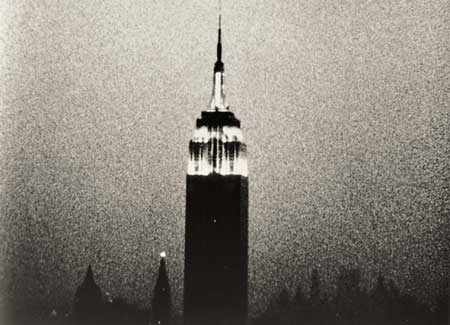
I also caught about a minute of Andy Warhol's Empire (1964), which is currently being screened on a loop (well, a two hour segment of it) at MoMA. I pretty much got the gist of it though—actually watching the whole eight hours might only make sense if you want to be able to say you've seen it. Or maybe if you've lost a bet. Now that I think about it, it might be interesting to see while fast forwarding through it (at the fastest speed possible), illustrating the passage of time and the activity (or lack of it) occurring, but at a much more watchable rate.

Monday, January 29, 2007


W.R.: Mysteries of the Organism * Dusan Makavejev * 1971

This film is somewhat of a collage, defying category. Makavejev weaves together various elements, consisting of a documentary about psychoanalyst and founder of orgone energy Wilhelm Reich, a narrative film about two Yugoslavian women and their love affairs, one of whom courts a Russian ice skater who, after achieving his first massive orgasm, beheads her with the blade of his skate, a Soviet propaganda film about Stalin, and various shots of transvestites, protesters, artists and other 1970s New York weirdos. (The latter footage includes Tuli Kupferberg of the Fugs marching around masturbating a toy rifle and artist Nancy Godfrey creating a cast of Screw magazine editor Jim Buckley’s erect penis.)

Prior to the screening of this film, I was entirely unfamiliar with both Reich and orgone energy, which, onscreen, involves people lying with their backs arched, hips gyrating, moaning and screaming out, “No, no, no!” or the occasional “Mama!”—in one scene, a whole room full of people engaging in such activities appears especially bizarre. Reich coined the term in reference to a “universal life energy” with healing and sexual powers that he claimed to have discovered in the 1930s. Unfortunately for him, his theories were wholly rejected by American psychologists, his books burned by the FDA.

The film’s underlying theme seems to explore the relationship between Communist and sexual politics, that if everyone were able or willing to release their orgone energy, much of the world’s political problems would be cured. However, this is a somewhat loosely laid out argument, the various components of the film not forming a clear-cut whole, but rather an insane hodgepodge. I was more engaged by the first half hour or so, when it appeared to simply be a straight documentary about Wilhelm Reich. Not to say that I disliked the rest of it, though I can’t say I’m certain as to what to make of it. The film was originally rated X, though I’d disagree with that evaluation—there are a number of sexually explicit scenes, but it isn’t exactly pornography. This did not, however, stop the middle-aged couple seated next to me from leaving in a huff mid-screening. Really, what did they think they were getting themselves into?

Sunday, January 28, 2007

Movies watched, week of January 21-27, 2006

Confessions of a Dangerous Mind, George Clooney, 2002
Pan's Labyrinth, Guillermo del Toro, 2006
Monty Python and the Holy Grail, Terry Gilliam and Terry Jones, 1975
W.R.: Mysteries of the Organism, Dusan Makavejev, 1971

Sunday, January 21, 2007

Movies watched, week of January 14-20, 2007

The Good Shepherd, Robert De Niro, 2006
The Rules of the Game, Jean Renoir, 1939
City of Lost Children, Marc Caro & Jean-Pierre Jeunet, 1995
An Inconvenient Truth, Davis Guggenheim, 2006
Muppets Take Manhattan, Frank Oz, 1984

Thursday, January 18, 2007


Hospital * Frederick Wiseman * 1970

Frederick Wiseman’s vast body of work spans three decades, an important compiling of documents concerning various American institutions—high schools, the army, hospitals, welfare, and so on—which, unfortunately, has rarely been seen by the public, as Wiseman’s documentaries are only available through his distributor, Zipporah Films. Thus, one has to be lucky enough to chance upon a PBS or film society screening in order to see them, as I did.

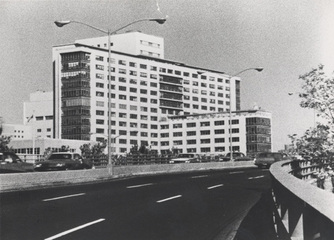
Wiseman’s 1970 film, Hospital, depicts a cross-sampling of the daily activities of the Metropolitan Hospital in Manhattan. While each vignette is depressing in its own way, it doesn’t appear that the predicaments in which the patients find themselves have resulted from neglect on behalf of the individual hospital staff members, who, for the most part, seem to genuinely want to help the patients but are restricted by greater sociological and institutional factors. A doctor voices his official complaint concerning a woman who was improperly transferred from another hospital, her life put in jeopardy, which he has apparently done many times, though no improvement has been achieved. A group of nurses try to determine what to do about the baby who fell 15 feet out a window because no one was watching him, the matter further complicated by his family’s refusal to pick him up (one particularly concerned nurse wants to put him up for the night, while an older nurse whispers “you don’t want to get involved in something like this.”) A doctor struggles to convince a man who has sustained a head injury to receive further medical care, but he won’t listen to reason because there is no one at home to take care of his children. It’s clearly the system that’s at fault, i.e. inadequate health insurance, not enough available beds, a lack of communication, and all the other bureaucratic bullshit that is endemic to such institutions.

Wiseman takes a naturalistic approach to filmmaking, often referred to as “cinema verite,” avoiding the flashy accoutrements that other documentarians fall prone to. There is no voiceover narration, no music, just a string of scenes edited together to portray the scope of activities occurring inside a hospital—“pure voyeurism,” as it is described in The Boston Phoenix. This style is what I especially liked about the film; the jokes, and tragedies, come through in the editing.

Wiseman masterfully edits his films, weaving together a narrative, a story, out of the hours of footage that has been shot. In Hospital, there is a dramatic structure, though perhaps not a conventional one; there is no distinct rising action, denouement, or conclusion, and the only suspense occurs within each individual scene. The film ends with a shot of the hospital itself, slowly panning out to the highway running by it; we've been introduced to a small sampling of the characters within it, and now here is the main character, in a way a living organism in itself.

For me, the film's most memorable scene involves the young man who took a pill from some guy in the park and is given ipecac in an attempt to purge it from his system. He incessantly moans, “I don’t wanna die,” even as the doctor repeatedly assures him that he'll be fine, abruptly sitting up in bed and uttering phrases like, “I just feel so lost.” He eventually pukes up more than you'd imagine could fit in his stomach, very theatrically and exaggeratedly, spewing it all over the place. He then remarks that perhaps he should move back in with his parents in Minnesota, because he's studying art in New York but "you can't do anything with art." This scene generated a significant amount of laughter from the audience, though I found myself feeling a little guilty in doing so. But his look of intense confusion, his ridiculous actions, coupled with the doctor's patient yet deadpan demeanor“Nurse, give me 10 ccs of ipecac…better make it 20”are too amusing not to provoke such a reaction. Yet it somehow feels unsettling that we’re made to laugh at him, as, though his situation is not life-threatening, it’s probably a terrifying experience.

Many of Wiseman's films raise such ethical questions: is it acceptable to film people in these intimate situations? Are they in the right frame of mind to give consent? Are they pressured to give consent? I'm not sure that I can supply a definitive answer. In a 1998 interview in The Boston Phoenix, Wiseman stated, in reference to his interviewing style, "I try to be friendly, and I hope that I am friendly, but not phony. I try not to convey the impression that we are going to be friends for a long period of time."

One can speculate that the participants don't really understand what they are agreeing to, or that such films are exploitative. But (with noted exceptions) while their vulnerabilities are aired for generations of strangers, this documentation enables us to feel compassion for them, making us aware of a set of difficulties and struggles we might never have considered. On the whole, Wiseman's films supply an essential record of a largely overlooked history.

Sunday, January 14, 2007

Movies watched, week of January 7-13, 2007

Hospital, Frederick Wiseman, 1970
Crumb, Terry Zwigoff, 1994

Monday, January 08, 2007

Movies watched, week of December 31, 2006-January 6, 2007

Rififi, Jules Dassin, 1955
Paper Clips, Elliot Berlin, 2004
Sir Drone, Raymond Pettibon, 1989
Big Deal on Madonna Street, Mario Monicelli, 1958
Unknown Passage: The Dead Moon Story, Kate Fix and Jason Summers, 2004

Sunday, January 07, 2007


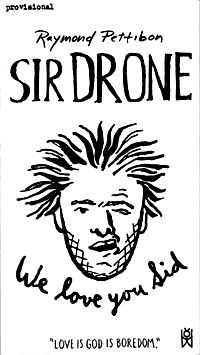
Sir Drone * Raymond Pettibon * 1989

In 1989, artist Raymond Pettibon shot four movies on home video equipment: Citizen Tania, Weatherman ‘69, The Book of Manson, and Sir Drone, a chronicle of the trials and tribulations of two nascent punk rockers in late 70s L.A. as they struggle to not be posers.

The quality of these films is cheap and low-grade, akin to that of the home movies my parents shot of my brother and me when we were kids. Sir Drone was filmed in two days, all the dialogue read from cue cards—which isn’t too surprising considering the quality of the acting. The cuts are particularly amusing, completely lacking in subtlety. In the middle of a scene, the sound will suddenly increase in volume, the lighting slightly altered—clearly somebody blew a line or started laughing and they had to stop taping for a second. Not to say that any of this is bad, as I often champion such DIY endeavors, preferring raw, “lo-fi” aesthetics to slick production. Moreover, this style complements the subject matter well, particularly in Sir Drone.

Duane and Jinx—played by Mike Watt of the Minutemen and fIREHOSE, and artist and one-time member of Destroy All Monsters Mike Kelley, respectively—desperately want to start a punk band. They sit on the floor of their sparsely decorated apartment playing inept, discordant noise not unlike that of early Half Japanese (I have to hand it to them—it’s not easy to fake such musical incompetence, as the two actors are actually talented musicians). Jinx in particular doesn’t know how to play “real” chords, making them up instead, which never ceases to infuriate Duane, whose ideas of what a punk band should look and sound like are quite rigid. Jinx, while naïve and insecure and thus all too willing to follow Duane in his quest to embody this strict punk rock image, seems like the visionary of the two.

Duane is particularly concerned about Jinx’s long hippie hair, and is always running after him with a pair of scissors, tauntingly cutting the air. At one point he claims that Jinx won’t cut his hair because “his hippie mom won’t let him,” to which Jinx whines, “that’s not true!”, their banter akin to that of children squabbling. It is revealed, however, that not too long ago Duane was a hippie as well and is now embarrassed, urgently trying to cover up this fact. While waiting outside a Dils show, for example, he complains that they’re checking IDs; though he’s over 21, he doesn’t want to take his out because in the photo he has “hair down to here.”

The film, one might say, is about posers desperately trying not to be posers. In one scene Duane randomly yells out his window, “Hey, you poser!” When Jinx asks who he’s yelling at, his response is “Just some poser.” He then grabs a radio and holds it out the window, claiming he’s going to throw it at a hippie, but can’t bring himself to do it. He wants to act outrageous but doesn’t have the guts.

At a show, they run into Duane’s cousin, Vince. (“I’m not Vince anymore, Duane. Call me Gun.” “I’ll call you an asshole before I call you Gun.”) Apparently Vince is a punk now, and they invite him back to their apartment and later to sing in their band. Now all they need is a drummer to complete their quartet, so they audition various people who seem wholly unimpressed. When the particularly arrogant Bizz attempts to play along with the other three, he scoffs at Jinx’s guitar playing: “Man, my sister can play better than that!”

Things really start to go downhill when Jinx brings home a girl named Goo* and Duane gets a little jealous, tension heightening in the household. Jinx quits the band several times, despite the fact that he’s still playing music with them.

The auspicious moment arrives when Vomit, played by Raymond Pettibon, shows up looking for Bizz, and mentions that he has an open time slot at a gig he’s setting up. A drawn-out “harrowing” scene follows—I won’t ruin this part but it involves scissors.

The film ends on a cheerful note, the band playing as a four-piece with Goo on drums, the final shot a hand-drawn Pettibon flyer for an X/Germs/Dils/Punktones/Sir Drone show.

While the characters can be gratingly annoying, they’re also strangely endearing. The dialogue is brilliant and at times hilarious, my favorite line occurring when Vince holds up some Peter Frampton records and asks who they belong to. Duane, mortified, says, “all that shit belongs to Jinx,” who replies, “I play ‘em at 78, man!” Another great moment comes when the band is trying to come up with a name. The rejected suggestions include Neutron Bomb, The Glue Snifters, Acne Condom (“I like that one, but not for our band”), Gigantor in Bondage, Chairman of the Bored, The Men From Punkle, Revoltin’ Travolta, Summer Picnic Nightmare, and The Jacket Offs, among others.

On the surface, the film appears to be making fun of punks, though I think the theme is a little more complex than that. Like anything of its kind, the punk scene spawned more than a few Johnny-come-latelys who turned it into a parody of itself, and perhaps Pettibon was trying to portray these negative aspects. Or maybe he just wanted to tell the story of two young, insecure, awkward kids who want so badly to be punks that they forget to be themselves.


* I wonder if Goo is named for the Sonic Youth song “My Friend Goo,” the title character a girl who plays the drums and “looks through her hair like she doesn’t care.” The fact that Raymond Pettibon drew the cover art for Goo seems to reinforce this theory, though I can’t be certain.